Tile showrooms are not built to sell safety. They are lit to make surfaces glow and laid out so you touch things with a dry hand. Almost every dangerous bathroom floor I have pulled up was chosen under exactly those conditions.
There are three numbers worth knowing, and they are not interchangeable.
DCOF: the one that matters most in the United States
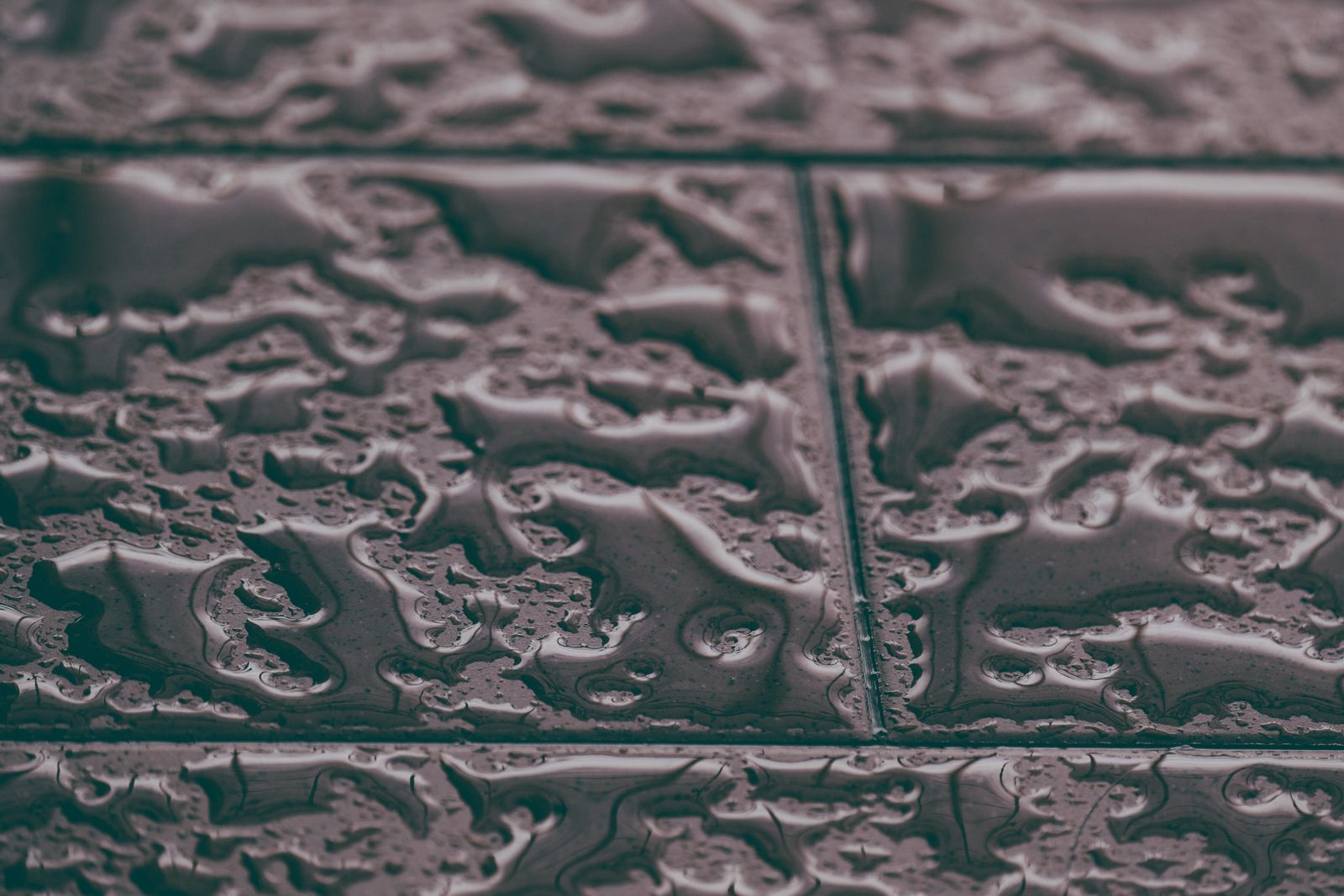
Dynamic coefficient of friction, measured wet by the AcuTest method described in ANSI A137.1. It simulates a shod foot already in motion, which is the realistic slip scenario. The published threshold for level interior tile expected to be walked on wet is 0.42.
Treat 0.42 as a floor, not a target. Our default shower-pan mosaic measures 0.62. Polished porcelain typically lands near 0.28, which is why we will not put it in a bathroom regardless of what it costs or how it looks.
DIN 51097: the barefoot one
A German ramp test performed with bare feet on a wet, soapy incline, graded A, B or C. A is the gentlest, C the most slip-resistant. This is the test that actually describes a shower, because nobody showers in shoes.
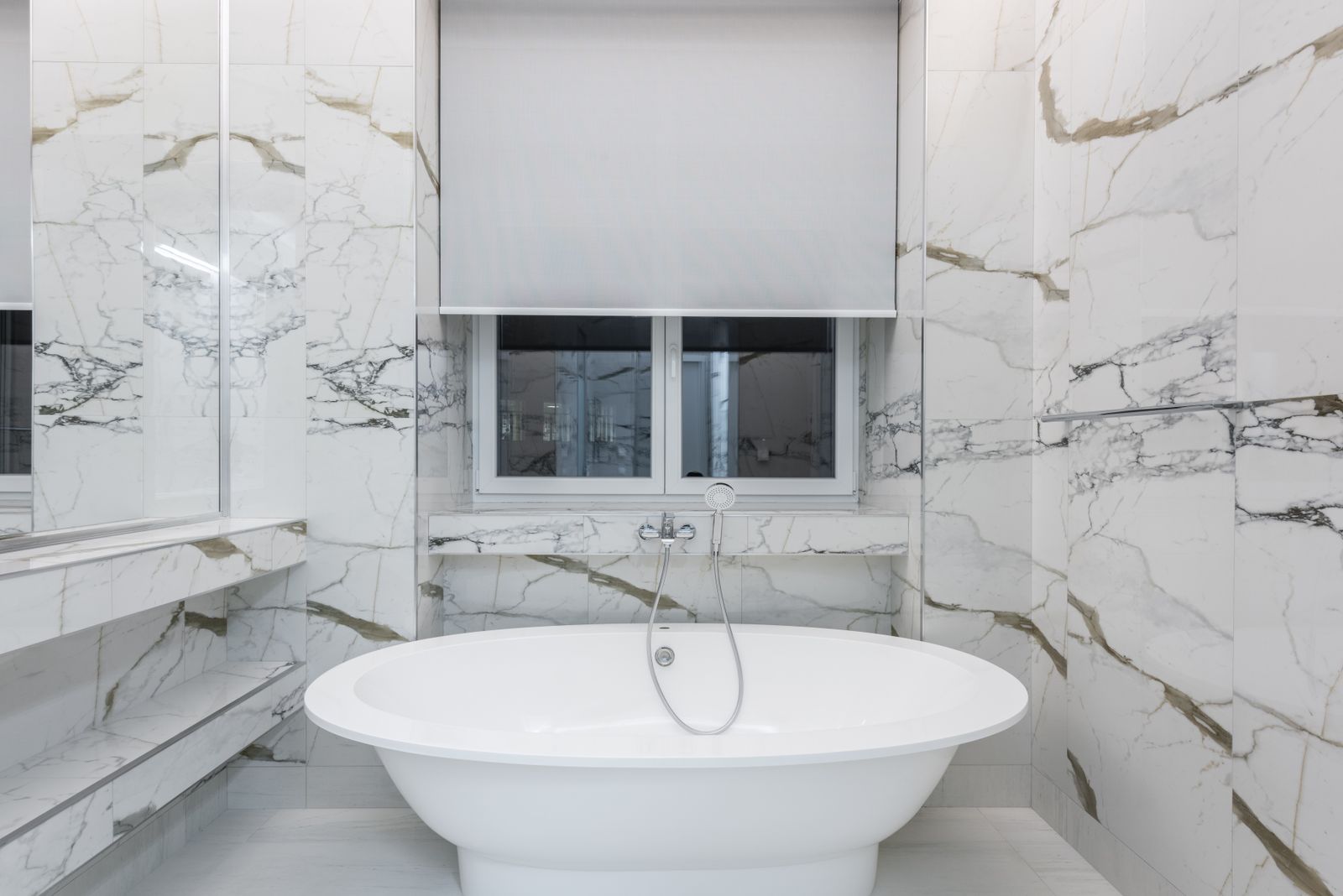
For a shower floor we want class B as a minimum and prefer class C. Honed marble comes in at class A, which tells you everything about why it belongs on a wall instead.
R-values (DIN 51130): the shod ramp test
R9 through R13, tested with oiled footwear on an incline. It is a commercial and industrial metric, common on European datasheets. R9 is a dry interior floor, R10 is a domestic wet floor, R11 and above is genuinely grippy.
Useful as a cross-check when a manufacturer publishes an R-value but no DCOF, which happens with imported stock. Not a substitute for the wet DCOF number.
Tile size does half the work
Here is the part datasheets never say: joint frequency matters as much as surface texture. A 2 in mosaic puts a grout joint under the ball of your foot every two inches, and those raised, textured, slightly-lower joints are what a wet foot actually catches on.
A 24 in plank with a joint every two feet gives you nothing to catch. It can carry an excellent DCOF number on its face and still feel skittish underfoot in a soapy shower. For shower pans we use 2 in or smaller, every time, whatever the face rating says.
The contrast question
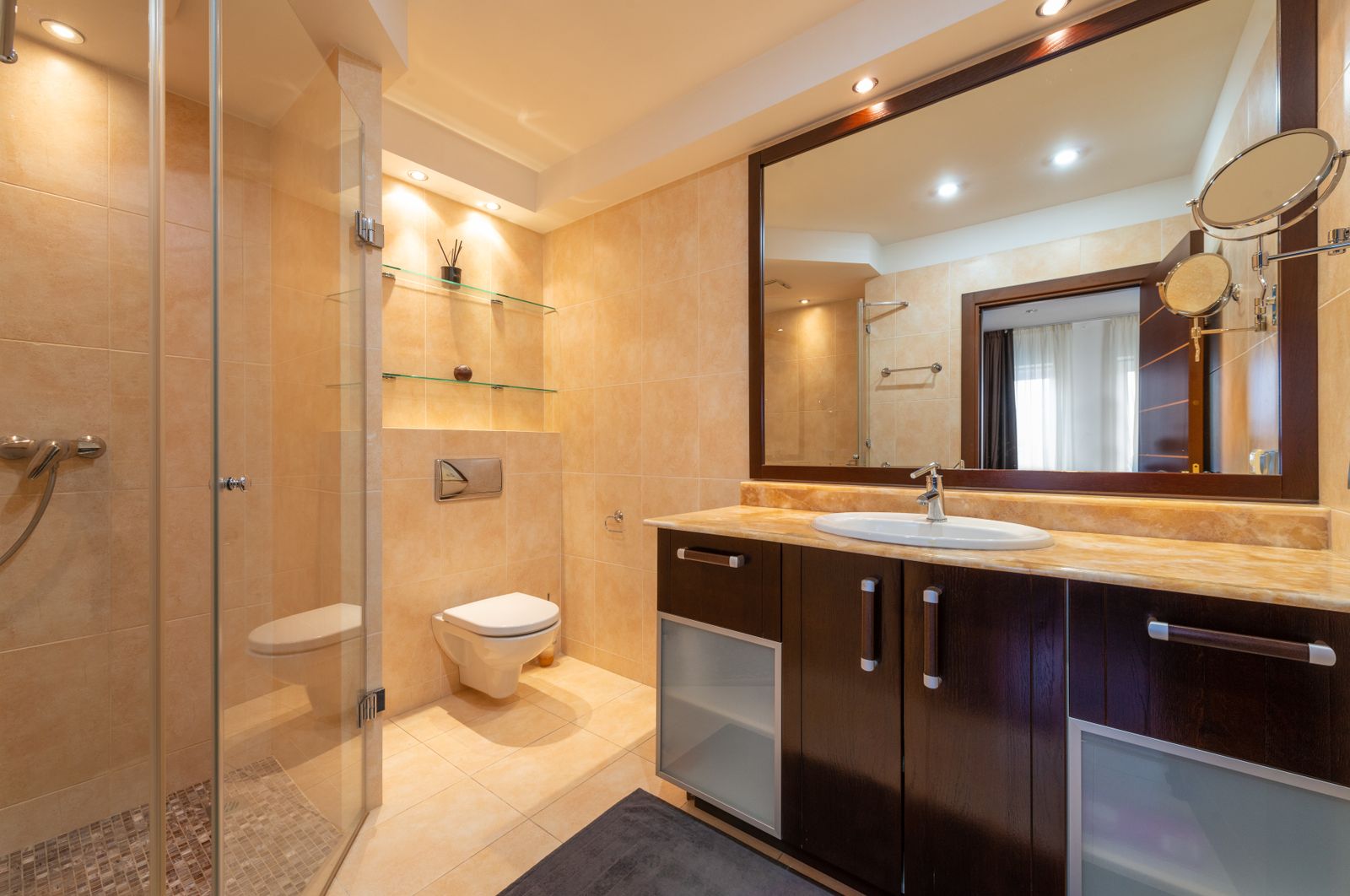
One last thing that has nothing to do with friction. A pale floor against a pale wall gives a low-vision eye no edge to read, and edges are what people trip on. We aim for at least 30 points of tone difference between the floor and the wall, and we mark a curbless transition with a grout joint that is colour-coordinated but still visibly distinct.
It costs nothing at specification time and it is impossible to add later.